Optimization of Er, Cr: YSGG Laser Parameters for Safe and Precise Bone Ablation: An Ex Vivo Histological Study
Article Sidebar
Main Article Content
Abstract
The Er, Cr: YSGG laser has emerged as a promising tool for safe and precise bone ablation in dental and maxillofacial procedures. This ex vivo study aimed to optimize the laser parameters to achieve efficient bone cutting with minimal thermal side effects.
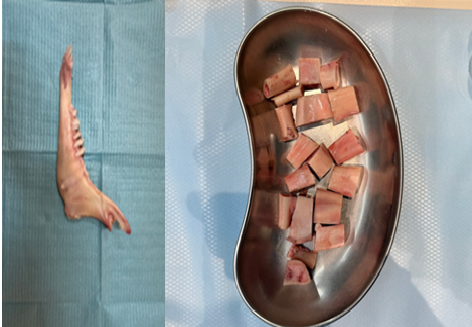
Method: This ex vivo study aimed to evaluate the histological effects of varying ER, Cr: YSGG laser parameters on bone incision quality. Mandibular bone samples were collected from three freshly slaughtered sheep and sectioned into six blocks. Osteotomies were performed using an ER, Cr: YSGG laser (2780 nm, Waterlase iPlus) at six different power-frequency combinations (2.5W/20Hz, 4W/20Hz, 6W/20Hz, 4W/30Hz, 6W/30Hz, and 8W/30Hz). Each specimen was irradiated in contact mode for 25 seconds using a MGG6-6 tip, and incisions were evaluated histologically after fixation, decalcification, and H&E staining. Measured variables included incision length, width, length-to-width ratio, carbonization, and precision.
Results: ER, CR: YSGG lasers can be considered practical, effective, and easy for bon incisions. There is no thermal damage. The quality of laser incision at 4W, 20Hz is the best among the parameters(p=0.013).
Received 25 Feb. 2025; Revised 24 Aug. 2025; Accepted 30 Sept. 2025; Published online 15 Dec. 2025
Article Details
Section
How to Cite