Quantitative Assessment of Laser Pulse Energy Effects on Zn–Cu Plasma Characteristics via Boltzmann and Stark Diagnostics
Article Sidebar
Main Article Content
Abstract
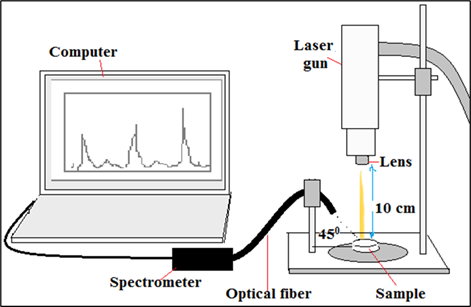
In this study, laser-induced breakdown spectroscopy (LIBS) was used to analyze the plasma generated from a Zn:Cu alloy (x = 0.9) using a Nd:YAG laser at 1064 nm. Plasma was generated at different laser pulse energies ranging from 400 to 800 mJ. The electron temperature (Te) was determined using the Boltzmann plot method, while the electron number density (ne) was calculated using Stark broadening. Other plasma parameters were also evaluated, including plasma frequency (fp), Debye length (λD), and Debye number (Nd). The results showed that Te increased from 0.846 eV at 400 mJ to 0.906 eV at 800 mJ, and ne increased from 1.000 × 10¹⁸ cm⁻³ to 1.121 × 10¹⁸ cm⁻³. Plasma frequency increased from 898.000 × 10¹⁰ Hz to 950,868 × 1010 Hz, while the Debye length slightly decreased from 0.683 × 10⁻5 cm to 0.668 × 10⁻5 cm. The Debye number showed modest variation around 1300, reflecting relatively stable collective behavior across the energy range. These findings indicate that higher laser energy leads to hotter and denser plasma, enhancing the emission intensity and plasma characteristics. The study contributes quantitative insights into Zn–Cu plasma behavior under varying laser energies, providing potential applications in material diagnostics using LIBS.
Received 26 Apr. 2025; Revised 27 Jun. 2025; Accepted 3 Jul. 2025; Published online 15 Dec. 2025
Article Details
Section
How to Cite