Effects of Laser Irradiation on Copper PhthalocyanineNanostructure and its Optoelectronic Device
Article Sidebar
Main Article Content
Abstract
Copper phthalocyanine (CuPc) films exhibit strong absorption as well as chemical stability against
visible light and hence are attractive organic semiconductors for an optoelectronic device. In the present work, we
have studied the influence of 650 nm laser irradiation on the 478.4 nm Cupc thin film and recorded its
photodetector behavior. X-ray diffraction analysis showed increased crystallinity of laser-treated samples, in which
the crystallite size enhanced from 30.48 to 39.03 nm with diminished microstrains. The average grain size increased
from 35.77 nm to 95.19 nm, while the surface roughness decreased as observed by an atomic force microscope
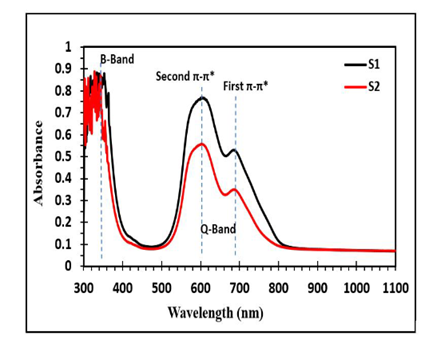
(AFM), evidencing a remarkable grain growth and surface smoothing process. The optical properties revealed small
changes in the π–π* transitions and a slight increase in the optical band gap from 1.82 to 1.84 eV, indicating a
decrease in the disorder of the structure. Hall effect measurements revealed that an increase in the carrier mobility
from 0.16 to 28.9 cm²/V•s resulted in good electrical properties despite a decrease of the free electron concentration
(n) due to the hole compensation mechanism. Meanwhile, the responsivity of laser-treated CuPc photodetector
dramatically improved from 54.92 to 190.98 μA/mW as well as external quantum efficiency increased from 10.89%
to 37.89% at a wavelength of 625 nm. These enhancements are ascribed to the laser-induced molecular realignment,
reduced trap density, and enhanced charge transport path.
Article Details
Section
How to Cite